
Russia’s Gas After the Sanctions: What Actually Happened
Aug 19, 2026 - Freedom Person
In 2021, Russia was pumping approximately 150 billion cubic meters of gas per year into Europe through pipelines that crossed Ukraine, ran under the Baltic Sea, and traversed Belarus. By 2025, that figure had fallen to roughly 25 bcm — a reduction of 83% in four years.
That part of the story is well known.
Here is the part that isn't: over the same four years, Russia's LNG exports remained remarkably resilient. The pipeline business collapsed. The tanker business barely moved. And in 2026, ships carrying Russian Arctic gas are still docking at European ports, roughly once every four days.
This is an account of what Western sanctions actually did to Russia's gas economy — and why the answer depends entirely on which kind of gas you're asking about.
How Much of Russia's Budget Comes from Oil and Gas
Russia has one of the most resource-dependent government budgets of any major economy on earth. For most of the post-Soviet period, oil and gas revenues have accounted for 30–45% of all federal government receipts. In 2021 — the last year before the war — that figure stood at approximately 36% ($123 billion out of a total federal budget of roughly $343 billion).
Hydrocarbons were equally important to Russia's external trade. In 2021, crude oil, refined petroleum products, pipeline gas, and LNG together accounted for approximately 44% of Russia's total export revenues.
This dependency was not an accident. It was a structural feature of the post-Soviet economy that successive governments chose not to reverse: the rents from oil and gas were too large, too reliable, and too politically convenient to displace with manufacturing or services.
|
Year |
O&G Budget Revenue (RUB) |
O&G Budget Revenue (USD) |
YoY Change |
Share of Federal Budget |
|
2021 |
9.06 trillion |
~$123B |
— |
36% |
|
2022 |
11.59 trillion |
~$172B |
+27% |
42% |
|
2023 |
8.82 trillion |
~$103B |
-40% |
30% |
|
2024 |
11.13 trillion |
~$120B |
+26% |
30% |
|
2025 |
8.48 trillion |
~$102B |
-24% |
~21% |
|
2026* |
~7.9T (projected) |
~$96B |
~-6% |
— |
*Jan–Jul 2026 annualized
Two companies sit at the center of this system.
Gazprom is a state-controlled corporation that functions, in many respects, as an arm of the Russian government. Founded from the restructuring of the Soviet Ministry of Gas Industry in 1989, Gazprom holds exclusive rights to export natural gas by pipeline from Russia — a legal monopoly embedded in Russian law. It is the world's largest gas company by reserves, and for decades it was the instrument through which Russia both supplied and pressured its European neighbors.
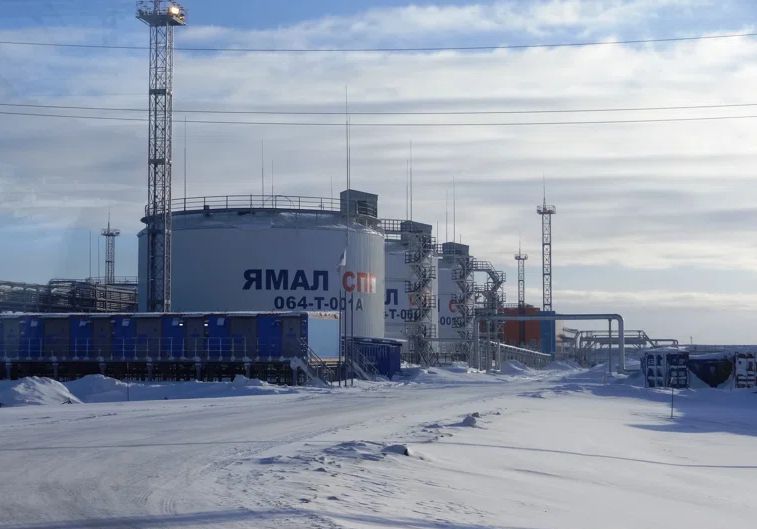
Novatek is a different kind of company: Russia's second-largest gas producer, privately owned (though with shareholders closely connected to the Kremlin), and specialized not in pipeline gas but in liquefied natural gas (LNG). Founded in 1994 in Western Siberia, Novatek became strategically important after 2017, when it launched Yamal LNG — Russia's first major Arctic LNG project. While Gazprom controlled the pipelines, Novatek built the tankers.
Understanding the distinction between these two companies is essential to understanding what happened next.
Russia Before the War: The Scale of Its Gas Dependency
In 2021, Russia's gas economy was operating at its historic peak. Europe was importing approximately 150 billion cubic meters (bcm) of Russian gas annually — roughly 45% of the continent's entire consumption. Long-term contracts kept prices predictable. Pipelines kept volumes stable. And Gazprom's revenues that year reached approximately 10.2 trillion rubles — around $138 billion at the exchange rates of the time.
For context: that was more than the annual GDP of Ecuador and more than the U.S. federal government spent on education that year. All from one company. All from one product.
Russia's federal budget, meanwhile, received approximately $123 billion in oil and gas revenues in 2021 — 9.06 trillion rubles at the annual average exchange rate of 73.65 rubles per dollar. It was the government's single largest source of revenue, equivalent to the GDP of Morocco.
Then came February 24, 2022.
Why Russia Made More Money from Gas in 2022 — Despite Losing Customers
The counterintuitive reality of the first year of the war was this: Russia earned more from energy in 2022 than it had in 2021, despite the sanctions.
The mechanism was simple. Europe panicked. Demand for any non-Russian gas — Norwegian, American, Qatari, Algerian — surged simultaneously. European gas prices, tracked on the Dutch TTF benchmark, had already been rising through late 2021. After the invasion, they went vertical. By August 2022, the monthly average TTF price reached €236 per megawatt-hour — roughly eight times the pre-crisis norm. On individual trading days, prices briefly reached the equivalent of $100 per million BTU, a price Europe had never seen before.
Here is the arithmetic that explains the paradox: if you sell 30% less gas, but the price per unit triples, your total revenue can still increase. Russia sold less gas to Europe in 2022 than in 2021. But the gas it continued to sell was being priced in a European market where every additional unit of supply had suddenly become extraordinarily expensive. Because European gas markets were integrated, Russian pipeline gas was exposed to the same extraordinary price environment reflected in the TTF benchmark.
The result was striking. Gazprom's revenues rose to approximately 11.7 trillion rubles in 2022 — roughly $173 billion — even as physical gas volumes shipped to Europe were already falling.
At the state level, the effect was equally remarkable. Russia's oil and gas budget revenues reached a record 11.59 trillion rubles, or approximately $172 billion at the 2022 average exchange rate of 67.5 rubles per dollar. Oil and gas accounted for approximately 42% of the federal government's total revenues, one of the highest shares recorded in the post-Soviet period.
In the first year, the sanctions failed to deliver the financial blow to Russia's gas sector that policymakers had expected. The unprecedented price shock instead temporarily offset much of the lost volume.
The sanctions, in the first year, did not hurt Russia's gas finances. They inadvertently enriched them.
Gazprom's First Loss in 25 Years: What Finally Changed in 2023
By 2023, the arithmetic had reversed. European gas prices had normalized: governments had rushed to fill storage, new LNG terminals had come online, and the panic buying had subsided. TTF prices fell back toward €35–45 per MWh.
Meanwhile, the physical volumes Russia was selling to Europe had collapsed — from roughly 150 bcm before the war to approximately 43 bcm in 2023, a reduction of nearly two-thirds.
The combination — lower volume and lower prices — hit Gazprom with full force.
In 2023, Gazprom posted a net loss of 629 billion rubles — approximately $7.4 billion, its first significant annual loss in roughly 25 years. Russia's total oil and gas budget revenues fell to 8.82 trillion rubles — approximately $103 billion, a 40% drop from the 2022 peak. The share of hydrocarbon revenues in the federal budget fell from 42% to 30%.
This was the moment sanctions advocates had predicted. It arrived 18 months later than expected.
Russia Oil and Gas Revenue 2025: Three Blows — and None of Them Was the Sanctions
In 2025, Russia's oil and gas budget revenues fell to 8.48 trillion rubles (~$102 billion) at the 2025 average exchange rate of 83.4 rubles per dollar — a decline of approximately 24% from the 2024 peak. But the mechanism of this decline matters more than the number itself.
Blow 1: Global prices fell. Crude oil prices declined approximately 18% through 2025 due to global oversupply. This had nothing to do with sanctions — it was a market phenomenon. Russia sells oil and gas in dollars on global markets. Lower global prices mean lower dollar revenues regardless of where the buyer is located.
Blow 2: The ruble strengthened. Between 2024 and 2025, the ruble appreciated approximately 10% against the dollar — moving from an average of 92.4 to 83.4 rubles per dollar. This sounds like good news for Russians. For the Russian budget, it was the opposite. Russia's government collects taxes and funds its operations in rubles. When it sells oil abroad, it receives dollars, then converts them. A stronger ruble means each dollar of export revenue generates fewer rubles — compressing the budget's purchasing power even as the dollar revenue held steady.
Blow 3: Ukraine hit the infrastructure. Through 2024 and 2025, Ukrainian long-range drone strikes systematically targeted Russian energy infrastructure — oil refineries, storage facilities, port terminals. By early 2025, analysts estimated approximately 10% of Russia's total oil refining capacity had been disabled. A drop of roughly 400,000 barrels per day in crude throughput created logistical bottlenecks that neither the shadow fleet nor alternative buyers could fully absorb.
The 2025 revenue decline was real. But it was caused by a combination of market forces, military strikes, and the ruble's behavior — not primarily by the design of the sanctions packages themselves.
As of mid-2026, the decline has continued. In the first seven months of 2026, Russia's oil and gas budget revenues totaled 4.6 trillion rubles — approximately $56 billion. If that pace continues, full-year 2026 revenues would come to roughly $96 billion, a further decline of around 6% from 2025.
More significantly, Russia's cumulative federal budget deficit by July 2026 had already reached 6.45 trillion rubles — exceeding its planned full-year deficit of 3.79 trillion rubles. The gap between energy revenues and government spending is increasingly being covered by the National Wealth Fund and domestic borrowing.
Why Can't Russia Simply Replace Pipelines With LNG?
By mid-2026, Russia's gas revenues remained dramatically below their pre-war trajectory. Gazprom's European pipeline business — the core of the company for 40 years — has lost its primary market. The company that once heated Germany, Austria, Italy, and Slovakia is now selling most of its output to China via a single pipeline at prices approximately 30–40% below what European customers used to pay.
A natural question arises: if Russia can no longer sell gas through pipelines to Europe, why not simply build more LNG factories? Convert the gas to liquid, load it onto tankers, sell it anywhere in the world — just as the United States does?
Russia tried. And the answer to why it has not succeeded is perhaps the most revealing story about what Western sanctions actually accomplished.
Arctic LNG 2: How Sanctions Blocked Russia's Plan B
In 2013, Novatek launched the Yamal LNG project — a facility on the remote Yamal Peninsula in the Russian Arctic capable of producing approximately 24 bcm of LNG per year. It was a remarkable engineering achievement, requiring specially built Arc7 ice-class tankers capable of sailing through two meters of Arctic sea ice, a new port at Sabetta built from scratch in permafrost conditions, and $27 billion in investment.
The success of Yamal LNG convinced Novatek to pursue a second, larger project: Arctic LNG 2, designed to produce 19.8 million tonnes per year — roughly 27 bcm — from the neighboring Gydan Peninsula. Construction began. Western companies signed contracts to supply the critical equipment.
Then came the invasion. And then came sanctions on the technology.
Liquefying natural gas at Arctic scale requires engineering that Russia does not produce domestically. The critical components:
- Gas turbines for liquefaction:The American company Baker Hughes had contracted to supply 21 LM9000 turbines — high-performance gas turbines that power the liquefaction process. Baker Hughes delivered 4–7 units before terminating all deliveries and services in June 2022. Novatek attempted to substitute Chinese-made turbines from Harbin, but they remain unproven at Arctic LNG scale.
- Cryogenic heat exchangers:The core technology that cools gas to -162°C is controlled by two companies: Linde (Germany) and Air Products (United States). Both exited Russia in 2022 under EU and US sanctions. Without their proprietary "coil-wound heat exchangers," the liquefaction trains cannot operate at design capacity.
- Cargo containment systems for tankers:GTT — a French company that holds a near-monopoly (over 90% of the global market) on the membrane insulation systems used inside LNG cargo tanks — suspended all Russian contracts in January 2023. Without GTT's technology, no new LNG tankers can be certified and built to Western safety standards.
- Ice-class tanker construction:South Korean shipbuilders — the only yards capable of building Arctic-grade LNG carriers — cancelled contracts under U.S. and allied pressure. Samsung Heavy Industries formally terminated agreements for 10 Arc7 carriers and 7 shuttle tankers in June 2025, retaining advance payments and filing arbitration.
- Russia's domestic alternative:The Zvezda shipyard in the Russian Far East was designated to build Russia's own fleet of Arctic tankers. As of mid-2026, it has delivered precisely two Arc7 carriers — assembled from pre-sanction components supplied by Samsung before the termination. Full domestic production capacity does not exist: the key technologies (ABB podded thrusters, GTT membrane systems, specialized cryogenic pumps) remain inaccessible.
Arctic LNG 2's first production train was completed in late 2023 but has operated intermittently at 40–50% capacity, unable to move its gas because it lacks both the Western insurance coverage required to enter major ports and a sufficient fleet of tankers to carry the volumes. The second and third trains remain in various stages of incomplete construction.
|
Company |
Country |
Technology |
Departure |
|
Baker Hughes |
USA |
LM9000 gas turbines (liquefaction) |
June 2022 |
|
Air Products |
USA |
Cryogenic heat exchangers |
2022 |
|
Linde |
Germany |
Cryogenic heat exchangers |
2022 |
|
GTT |
France |
LNG cargo membrane systems (>90% market share) |
Jan 2023 |
|
Technip Energies |
France |
EPC engineering & construction |
Early 2023 |
|
Samsung Heavy Industries |
South Korea |
Arc7 tanker construction |
June 2025 |
The gap between Russia's LNG ambitions and its LNG reality is not a matter of resources or will. It is a matter of technology. And technology — unlike pipelines, which take decades to build but cannot easily be sanctioned after the fact — is precisely what the Western sanctions targeted with some precision.
What has Russia actually lost?
In volume: Gas exports to Europe fell from approximately 150 bcm (2021) to roughly 36 bcm (2025) — a reduction of about 75%. The Nord Stream pipelines under the Baltic, which once carried up to 55 bcm per year, were destroyed in September 2022. The transit agreement through Ukraine expired at the end of 2024 and was not renewed. The infrastructure that served Europe for 40 years is either gone or idle.
|
Destination |
2021 |
2022 |
2023 |
2024 |
2025 |
|
Europe (pipeline) |
~150 bcm |
~101 |
~43 |
~31 |
~25 |
|
China (Power of Siberia) |
~10 bcm |
~15 |
~22.7 |
31.6 |
38.8 |
|
Turkey (TurkStream) |
~26 bcm |
~23 |
~23 |
21.1 |
21.2 |
In revenue: Russia's oil and gas budget revenues oscillated — rising in 2022 due to price windfalls, falling in 2023, recovering partially in 2024 through shadow fleet operations, then declining again in 2025. The trajectory, stripped of short-term volatility, points downward.
In alternatives: Russia exports approximately 38.8 bcm to China via the Power of Siberia pipeline, up from 10 bcm in 2021. But the price China pays — by multiple estimates — is 30–40% below what Europe used to pay. The infrastructure to move more gas to China does not yet exist. The Power of Siberia 2 pipeline, which Russia has been negotiating with Beijing since 2022, remains unsigned.
In LNG: The part of Russia's gas business that was best positioned to survive sanctions — flexible, globally traded, not dependent on a single pipeline — is also the part that Western technology sanctions have most effectively constrained. Yamal LNG continues to export, using its existing fleet and the contracts that predate the war. But the expansion that Novatek planned — Arctic LNG 2 — is stalled in a way that will take years, not months, to resolve.
Russia's gas revenues did not collapse. But the pathway through which Russia planned to rebuild and reposition them has been narrowed in ways that are measured not in months, but in the investment cycles and technology timelines of a capital-intensive extractive industry. The pipeline era is over as a European story. The LNG alternative remains, for now, a project rather than a business.
What that means for Russian state finances over the next decade depends on variables that are genuinely uncertain: the duration of the conflict, the trajectory of global energy prices, the speed at which China's own pipeline agreements are renegotiated, and whether Russia's domestic engineering base can close the technology gap that Western sanctions opened.
By Roman Severin

